


In construction, why should we use cleanroom panels? Do they help reduce costs or improve project quality? You will find the answer in the article below!
In developed countries, cleanrooms are widely known in many industries, but in Vietnam, the concept is still relatively new. However, with increasing international integration and the growing presence of foreign companies investing and opening branches in Vietnam, high-standard facilities such as cleanrooms have become more popular and more widely recognized.
To build a cleanroom, you need to prepare the surface, assemble the panels, complete installation, and conduct testing. So, why are panels the preferred material for cleanroom construction?
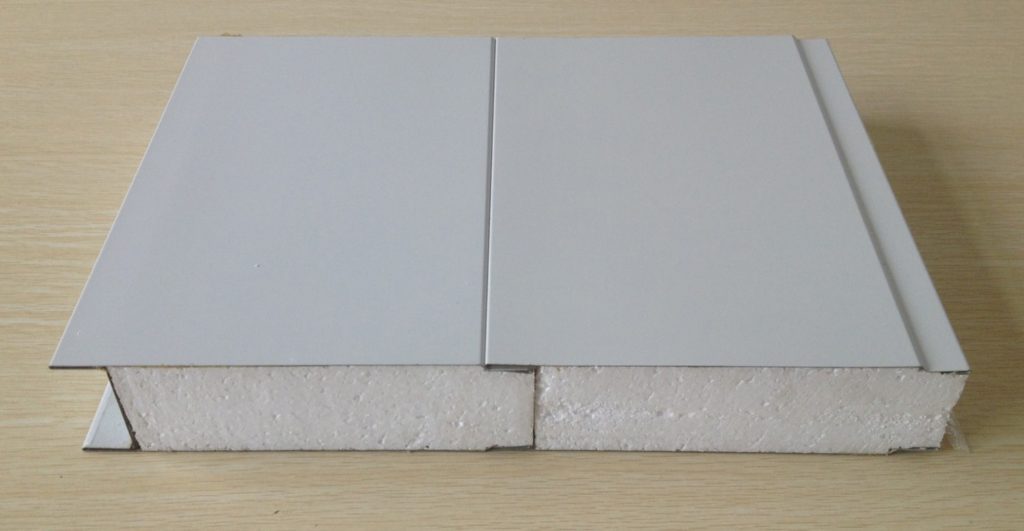
Basic Information About Cleanroom Panels
Cleanroom panels are materials used to construct the walls and ceilings of modular cleanrooms. They consist of two main components:
– Outer layers: galvanized steel sheets on both sides
– Core: insulating foam, typically EPS or PU
The steel sheet thickness is usually around 0.5mm, while the foam core varies: 50mm, 75mm, 100mm, 125mm, 150mm, depending on project requirements.
Panels are typically 1–1.2 meters wide and can be up to 15 meters long.
Panels are installed using a column-free structure, connected by tongue-and-groove joints or camlock systems. Wall and ceiling panels are joined using galvanized aluminum U/L/T profiles, with silicone sealant applied for final reinforcement.
Cleanrooms demand extremely strict physical and technical standards. A high-quality cleanroom must ensure insulation, soundproofing, dust resistance, waterproofing, and fire resistance. Fortunately, panels meet all these requirements exceptionally well.
Advantages of Cleanroom Panels
1. Excellent Thermal Insulation
The EPS/PU foam core provides outstanding thermal insulation, keeping the cleanroom cool and preventing cold air loss in low-temperature environments used for storing biological samples.
2. Soundproofing, Fire Resistance, and Moisture Resistance
The foam core also absorbs noise, prevents sound transmission, resists fire, and prevents water penetration — helping stabilize humidity, electrostatic levels, and acoustic conditions.
3. High Mechanical Strength
The galvanized steel layers have excellent mechanical durability, resisting impacts, oxidation, termites, and insects. They also help isolate the interior from harmful contaminants in the external environment.
Conclusion
The above explains why cleanroom panels are the ideal choice for cleanroom construction. We hope these insights help you understand their value and apply them effectively to your projects.
Thank you for reading, and best wishes from Viet Panel!