

Along with the development of the construction industry, traditional flooring such as concrete or ceramic tiles is becoming less popular and giving way to PVC flooring. What makes this material so special and widely used today? You will find the answer in the following article!
Structural Components of PVC Flooring
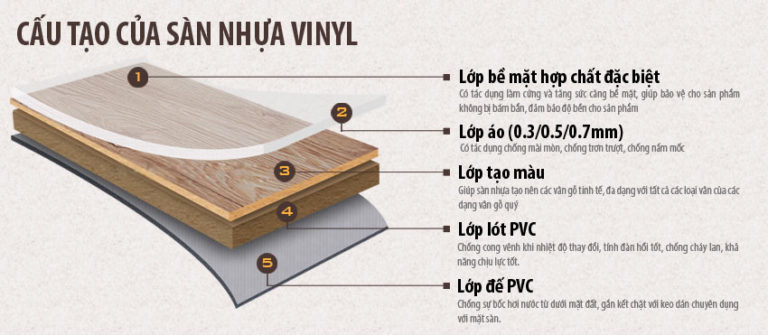
PVC stands for Polyvinyl Chloride – a type of plastic commonly synthesized through artificial methods and used as the main material for PVC flooring.
Structurally, PVC flooring consists of five distinct layers: surface layer, wear layer, color layer, cushion layer, and base layer.
– Surface layer: coated with a special compound that resists dirt, increases hardness and surface tension, and helps maintain the durability of the flooring.
– Wear layer: made of transparent synthetic resin mixed with aluminum oxide to enhance hardness, scratch resistance, abrasion resistance, anti-slip properties, and prevent mold and bacteria on the floor surface.
– Color layer: may feature wood grain patterns or various decorative styles to meet diverse aesthetic preferences.
– Cushion layer: made from PVC, provides mechanical durability, prevents warping thanks to its flexible elasticity, and strengthens the stability of the flooring during use.
– Base layer: the part that directly contacts the adhesive during installation. This layer, also made of PVC, shapes the flooring panels and ensures stability.
Advantages of PVC Flooring
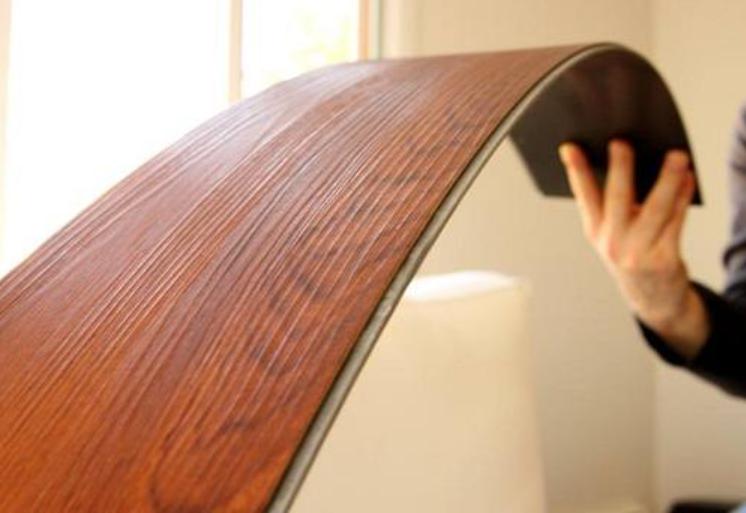
Most advantages of PVC flooring come from its polyvinyl chloride composition. This material is moisture-resistant, keeps the surface dry, and prevents unpleasant condensation during humid weather. In addition, due to its high chemical durability, PVC flooring is unaffected by water and specialized cleaning solutions.
Furthermore, with excellent heat resistance and minimal thermal expansion, you won’t need to worry about warping or shrinking. The product is also fire-resistant, antibacterial, mold-resistant, and highly slip-resistant. It can be enhanced with anti-static properties. With its attractive appearance, easy installation, maintenance, and repair, PVC flooring is ideal for cold storage facilities, clean rooms, factories, production areas, laboratories, and sterile hospital rooms.
Installation Process
The installation of PVC flooring requires several steps: surface preparation, application of PVC panels, joint sealing with glue, and finishing by removing excess material and cleaning the entire surface.
PVC panels are usually attached using specialized adhesives with strong bonding strength, ensuring they rarely peel or lift during usage. After assembling the panels, joints are reinforced with glue, and excess adhesive is trimmed off. Finally, the entire surface is inspected and cleaned before use.
Now you understand the structure and outstanding features of PVC flooring! With all these excellent advantages, this material is definitely a top-choice for residential and industrial flooring projects.
Thank you for reading this article from Việt Panel! Best regards!